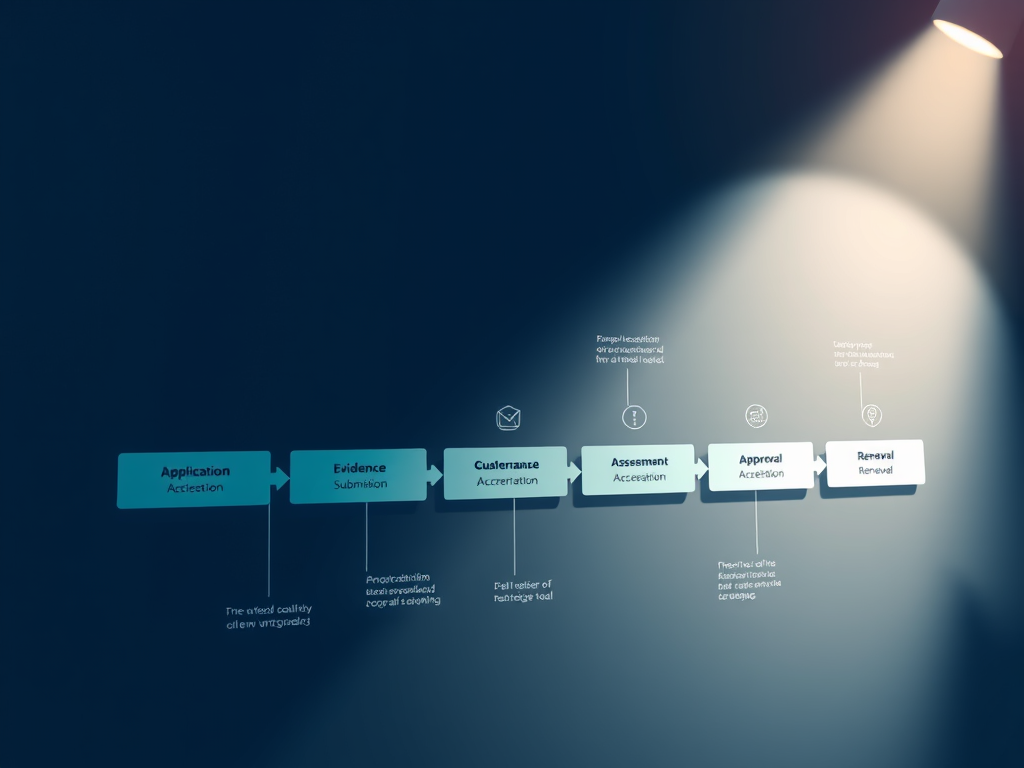
Accreditation Pathway and What’s Included
Getting accredited in the UK isn’t a one-click process, and it shouldn’t be. Buyers want to know you’ve been properly checked, not just handed a badge for paying a fee. That’s where the accreditation pathway comes in – a step-by-step journey that shows what’s assessed, what evidence you need, and what you actually get once you’re approved.

Why Have an Accreditation Pathway?
Procurement teams need consistency. If every supplier followed their own rules, buyers would drown in paperwork. The accreditation pathway is designed to make the process structured, fair, and transparent:
- Everyone follows the same steps.
- The evidence required is clear from the start.
- Outcomes are consistent across different trades and company sizes.
For businesses, this means no guesswork – you know what’s coming and what’s expected of you.

Step 1: Application
You start by registering for an accreditation scheme. This sets the scope: are you going for basic compliance checks, or a more advanced level with governance, risk, and ethical standards included?

Step 2: Evidence Submission
This is the core of the pathway. You’ll be asked to provide:
- Insurance certificates (employers’ liability, public liability, professional indemnity if relevant)
- Health & Safety policy and sample risk assessments
- Training and competence records for your workforce
- Policies covering equality, diversity, modern slavery, anti-bribery, data protection, and environmental management
- Business governance documents, depending on the level applied for
It’s not about producing a mountain of paper – it’s about proving you’ve got the right systems in place.

Step 3: Assessment
Trained assessors review your evidence against the defined criteria. They check if your policies are fit for purpose, if your insurance is current, and if your procedures actually meet legal and best-practice requirements.
If anything is unclear or missing, they’ll request clarifications rather than reject you outright.

Step 4: Approval and Certification
Once the assessor is satisfied, your application goes for final approval. If successful, you receive:
- Accreditation certificate – proof that your business has met the required standard
- Digital accreditation mark – to display on your website, vehicles, tenders, and marketing
- Listing in the accredited business directory – so buyers can find and verify you
- Annual review schedule – so your accreditation stays up to date

Step 5: Renewal
Accreditation isn’t a one-time event. Buyers expect ongoing assurance, so renewal is typically annual. That means updating your evidence, refreshing expiring documents (like insurance), and confirming that your policies are still fit for purpose.

What’s Included in the Accreditation Package?
Depending on the scheme level (basic, silver, gold), you can expect:
- Independent assessment and approval
- A recognised accreditation certificate
- Use of an official accreditation logo or badge
- Digital directory listing searchable by buyers
- Access to templates, training resources, and guidance
- Ongoing support with updates and renewals
Higher levels usually include enhanced checks, such as governance, financial responsibility, pensions compliance, modern slavery, and supply-chain ethics.

Why This Matters to Your Business
The pathway isn’t just red tape – it’s a competitive edge. By following a recognised process and being able to show your certificate, you:
- Save time in pre-qualification questionnaires (PQQs)
- Build credibility with new buyers
- Unlock access to frameworks and supply chains that require accreditation
- Reduce the risk of last-minute tender rejections

Final Word
The accreditation pathway takes you from application through to certificate and directory listing, with clear evidence requirements at every stage. What’s included isn’t just paperwork – it’s recognition, visibility, and credibility that puts your business ahead of competitors still fumbling through PQQs.


Leave a Reply